

The grand entrance to the Urederra Spring
Baquedano is the main access point to the Urederra Spring Nature Reserve, one of Navarre’s most iconic landscapes, featuring waterfalls, turquoise pools, and an exceptional forest.


The gateway to the headwaters of the Urederra, nestled among forests and medieval heritage sites.
Baquedano is the main access point to the Urederra Spring Nature Reserve, one of Navarre’s most iconic landscapes, featuring waterfalls, turquoise pools, and an exceptional forest.

Located between the Urbasa and Lóquiz mountain ranges, the area around Baquedano combines forest, river, and mountains to create one of the most spectacular landscapes in Las Améscoas.

Houses bearing coats of arms, the Church of St. John the Baptist, the Andueza Palace, and the ruins of the abandoned village of Amescoazarra-Inzura illustrate the historical significance of the municipality over the centuries.
Baquedano can be enjoyed year-round, although each season offers a different experience. Spring and fall are especially recommended for exploring the headwaters of the Urederra River, with its striking contrasts in color and water flow. Summer allows you to enjoy the coolness of the forest and the mountain trails, while winter offers a quieter, more evocative experience of the Urbasa landscape.
Baquedano is one of the districts that make up the municipality of Améscoa Baja, located in the wide natural corridor that stretches between the Urbasa and Lóquiz mountain ranges. Situated at an elevation of 654 meters on the left bank of the Urederra River, the village lies beneath the impressive limestone ridges of Urbasa and occupies a strategic position as the gateway to the Nacedero del Urederra Nature Reserve, one of Navarre’s most iconic natural areas.
The town center preserves a sprawling village with numerous houses bearing coats of arms from the 16th and 17th centuries, linked to lineages such as the Andueza, Azpilicueta, Urra, and the Baquedano family itself, whose surname has been documented in the valley since medieval times and is mentioned as early as 1201 in the Charter of Intzura. In terms of religious architecture, the highlights include the parish church of San Juan Bautista, a 16th-century Late Gothic structure that houses a Late Gothic carving of the patron saint, and the Baroque-style Santa Cruz Chapel, situated on an elevated site with sweeping views of the valley. Behind the church stands the Palacio de Andueza, a notable example of noble civil architecture.
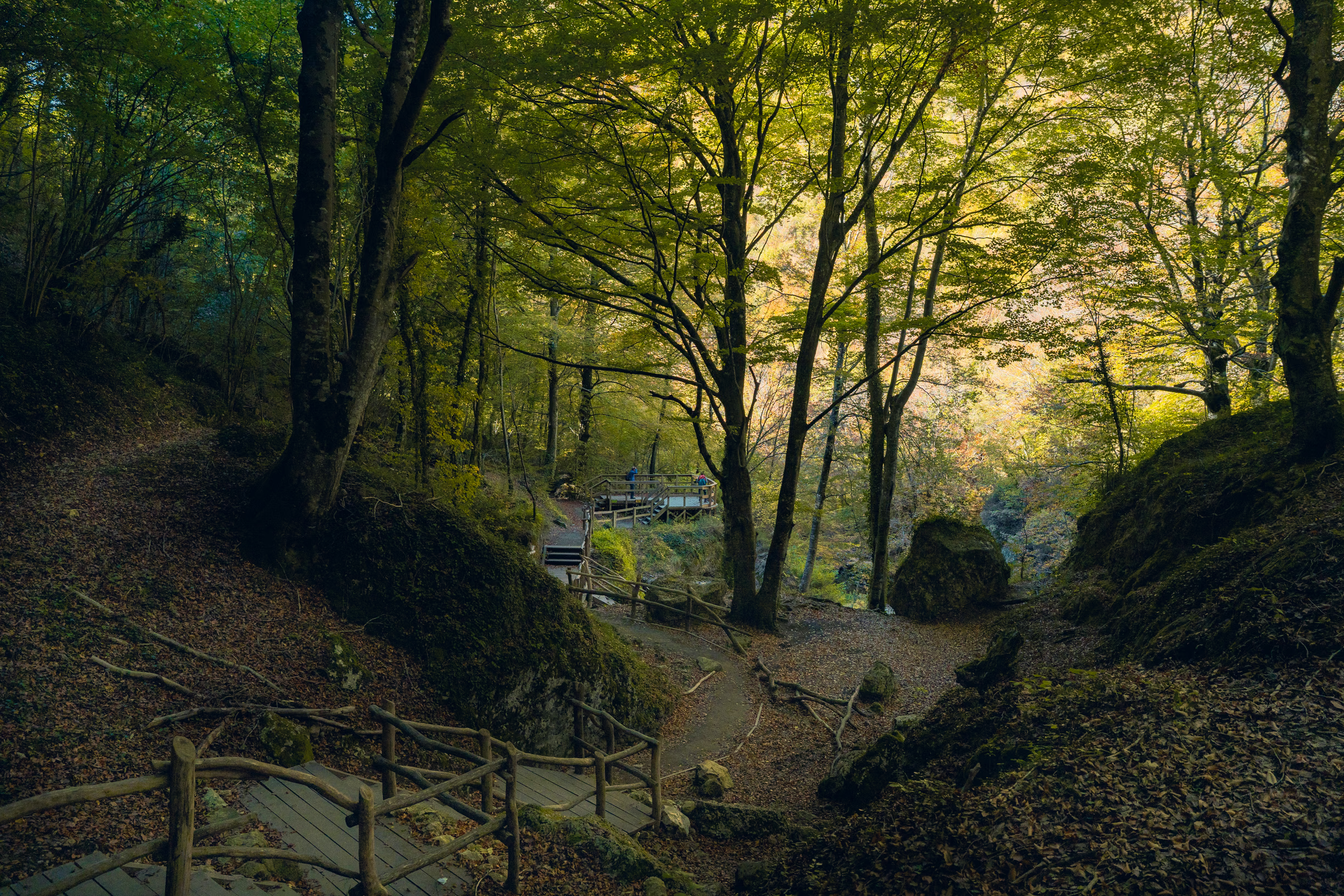
The natural surroundings define Baquedano’s identity. The trail leading to the headwaters of the Urederra River—designated a Nature Reserve in 1987 and part of the Urbasa and Andía Natural Park since 1997—starts right in the village. This is the main outlet of the Urbasa aquifer, with an average annual flow of 4,500 liters per second that can increase significantly after heavy rains. The nine-kilometer round-trip, well-marked trail winds through a forest dominated by beech trees, accompanied by mountain elms, ash trees, linden trees, rowan trees, maples, hazel trees, and boxwoods, until it reaches the turquoise pools and waterfalls that have made the Urederra a landmark of the region. The rich fauna includes rock-dwelling species such as the vulture, the Egyptian vulture, and the red kite.
In addition to the Nacedero, the municipal district preserves remnants of the medieval abandoned settlement of Amescoazarra-Inzura, an ancient fortress dating back to before 1300 and situated on a hilltop in the valley, where remains of walls and traces of dwellings can be identified. All of this underscores the historical and strategic importance that Baquedano held over the centuries.
9 resultados
Baquedano
Circular · 6,2 km · 2,5–3 horas aprox.

Baquedano
Espacios naturales

Baquedano
Espacios naturales

Baquedano
Patrimonio y monumentos

Baquedano
Espacios naturales

Baquedano
Espacios naturales

Dónde comer
Baquedano

Dónde dormir
Baquedano

Actividades turísticas
Baquedano
Mostrando 1-9 de 9 resultados

La capital del valle de las Améscoas, puerta de entrada a Urbasa y al Urederra.

Un pueblo entre Urbasa y Lóquiz donde montaña, patrimonio artístico y tradición rural conviven.

Un concejo entre sierras y farallones que sorprende por su patrimonio histórico.

Una villa con alma montañesa y herencia hidalga entre sierras y hayedos.