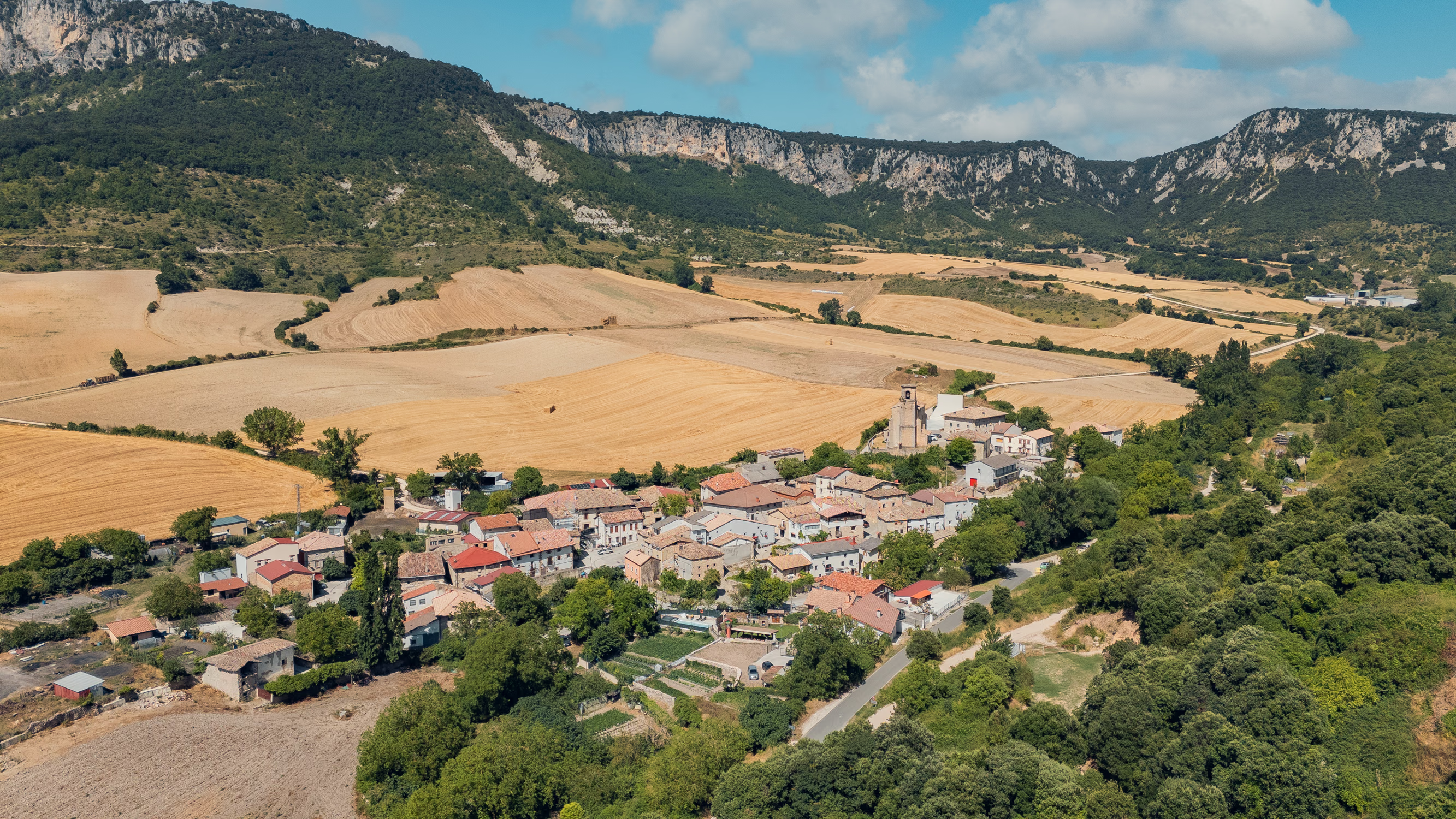
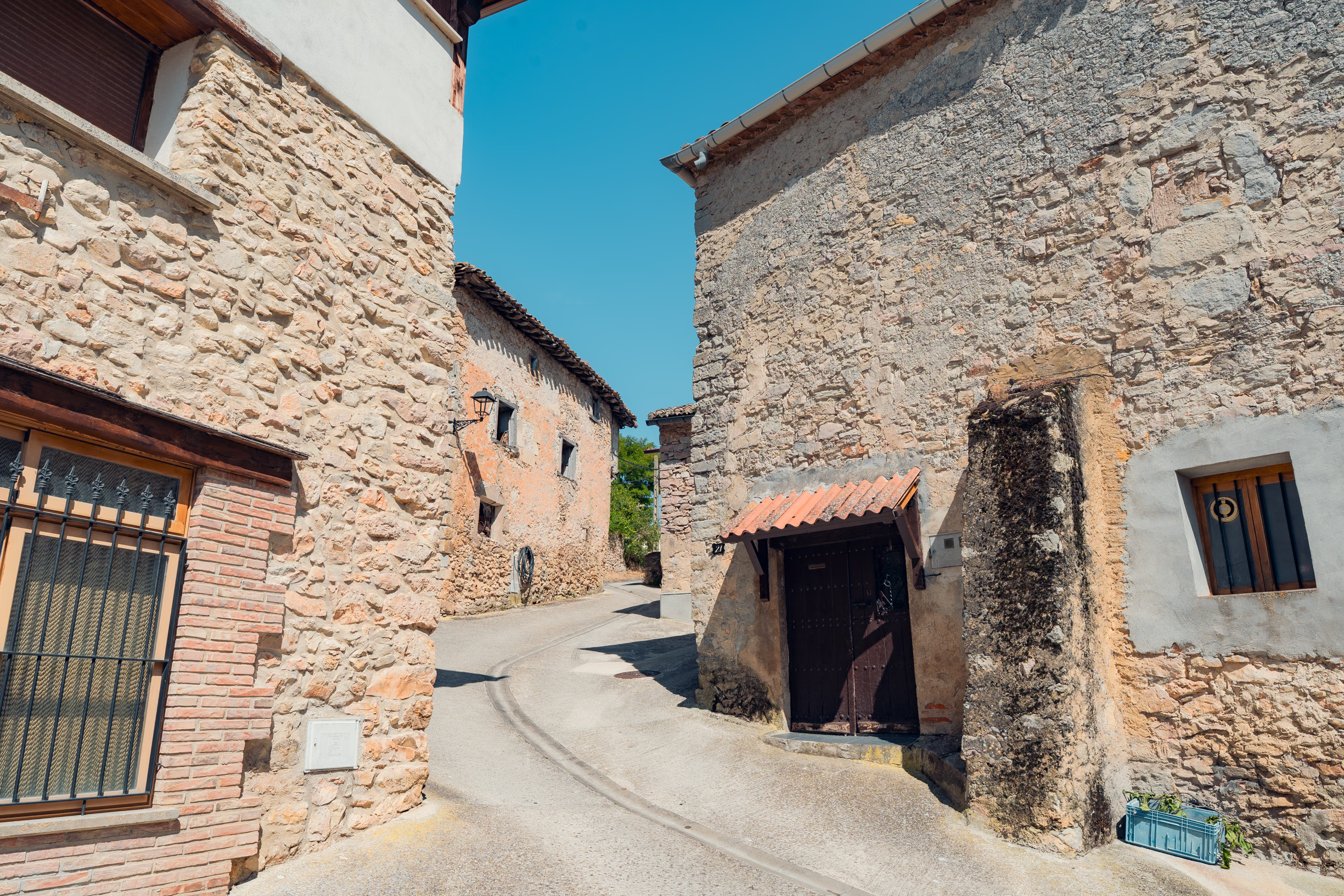
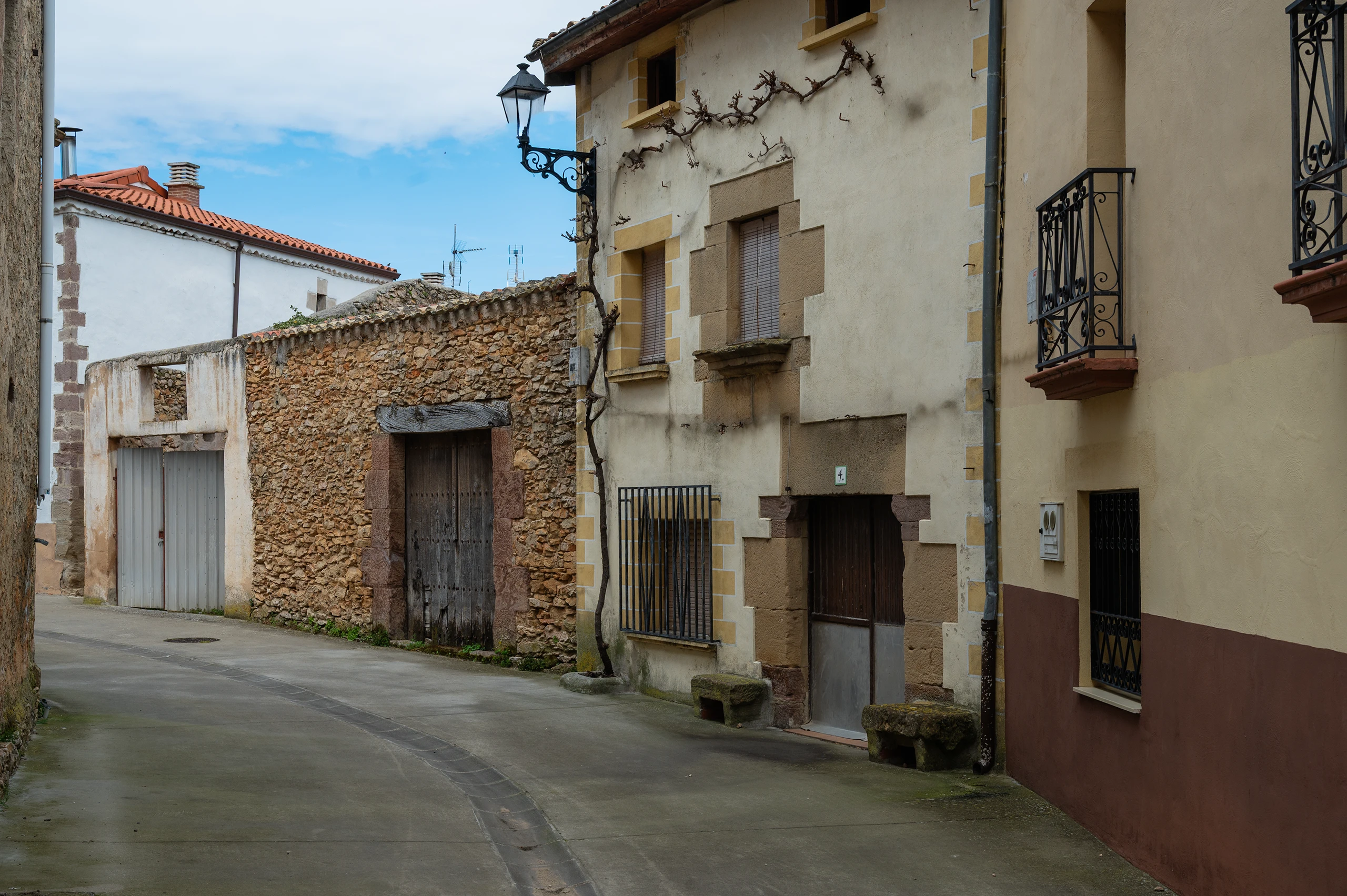
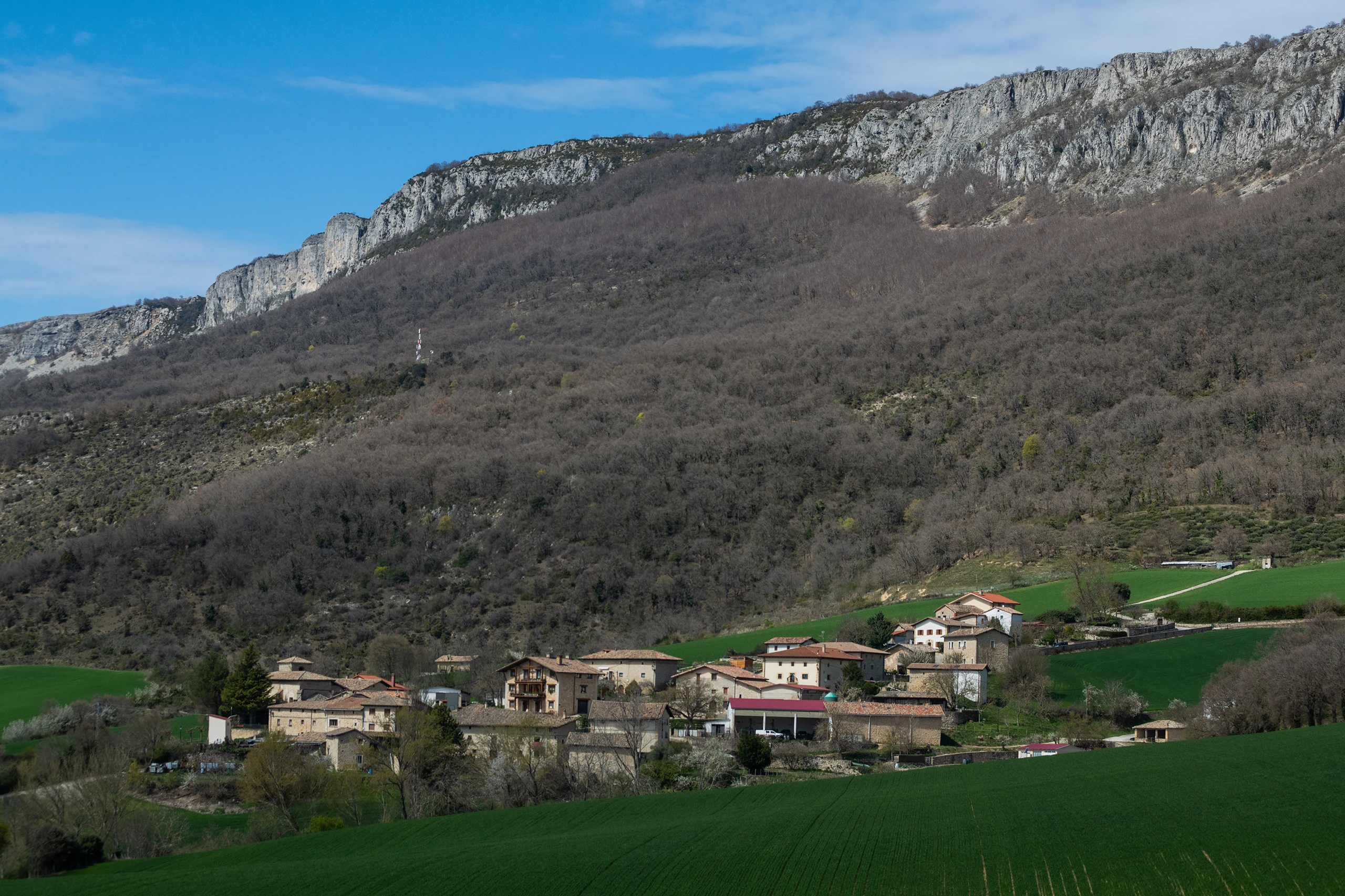
Viloria lies at the foot of the Sierra de Lóquiz, in the heart of the Lana Valley, and offers visitors a landscape deeply rooted in the mountains, traditional crafts, and well-preserved rural architecture. The town center, consisting of 17th- and 18th-century stone houses adorned with Baroque coats of arms, spreads out beneath the mountain’s crags, offering sweeping views of the valley and a tranquil atmosphere that invites visitors to explore the town at a leisurely pace.
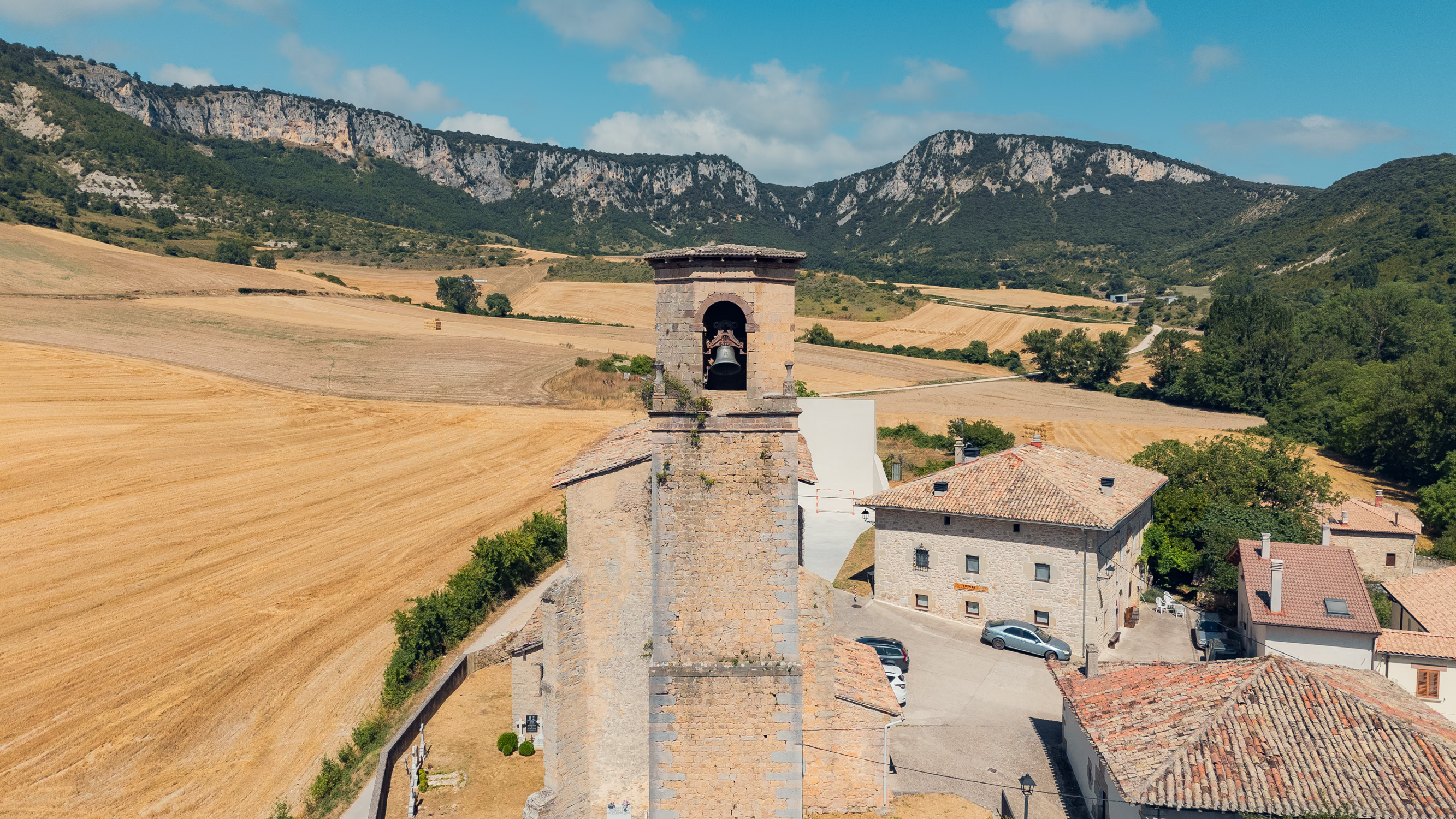
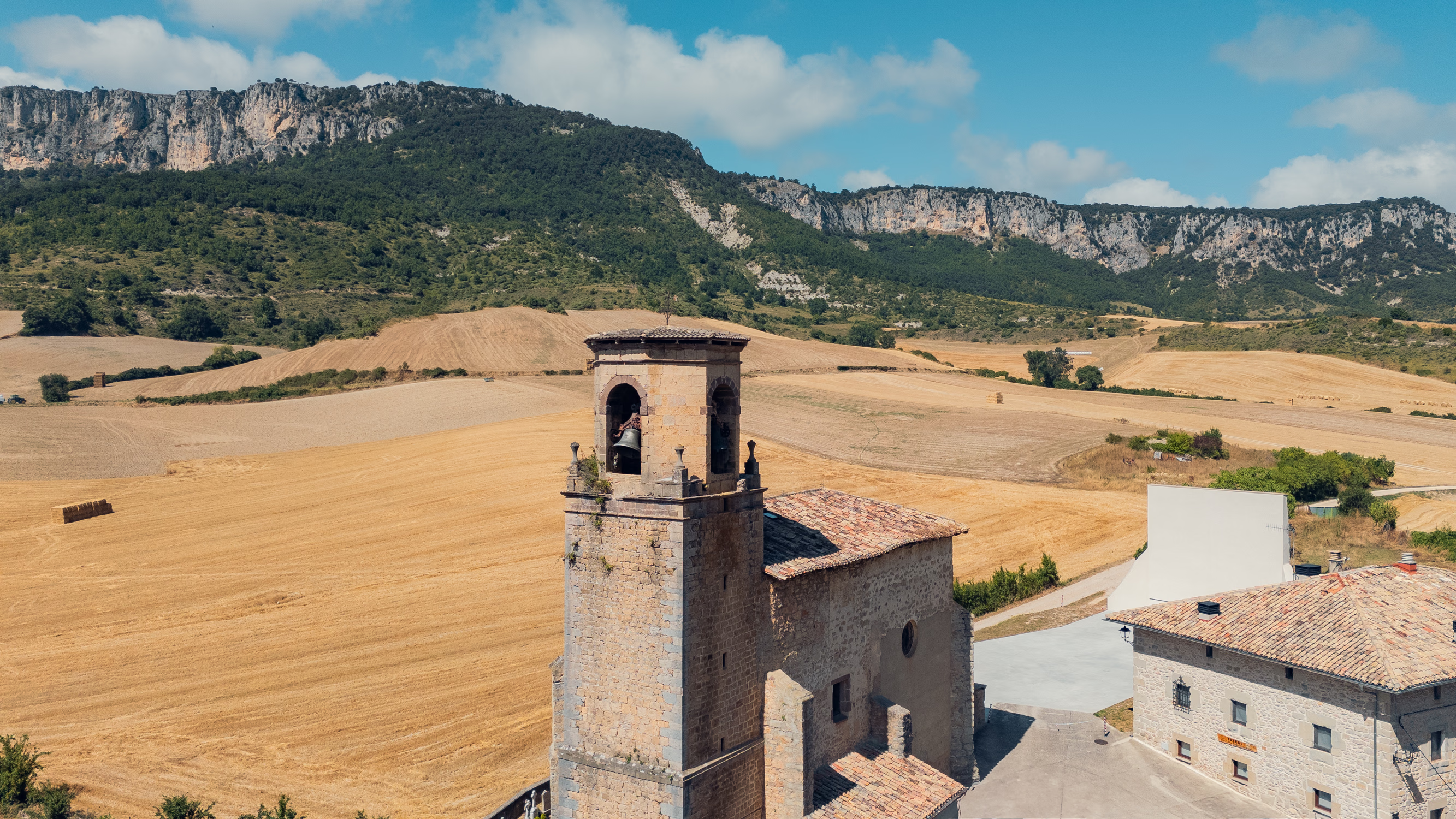
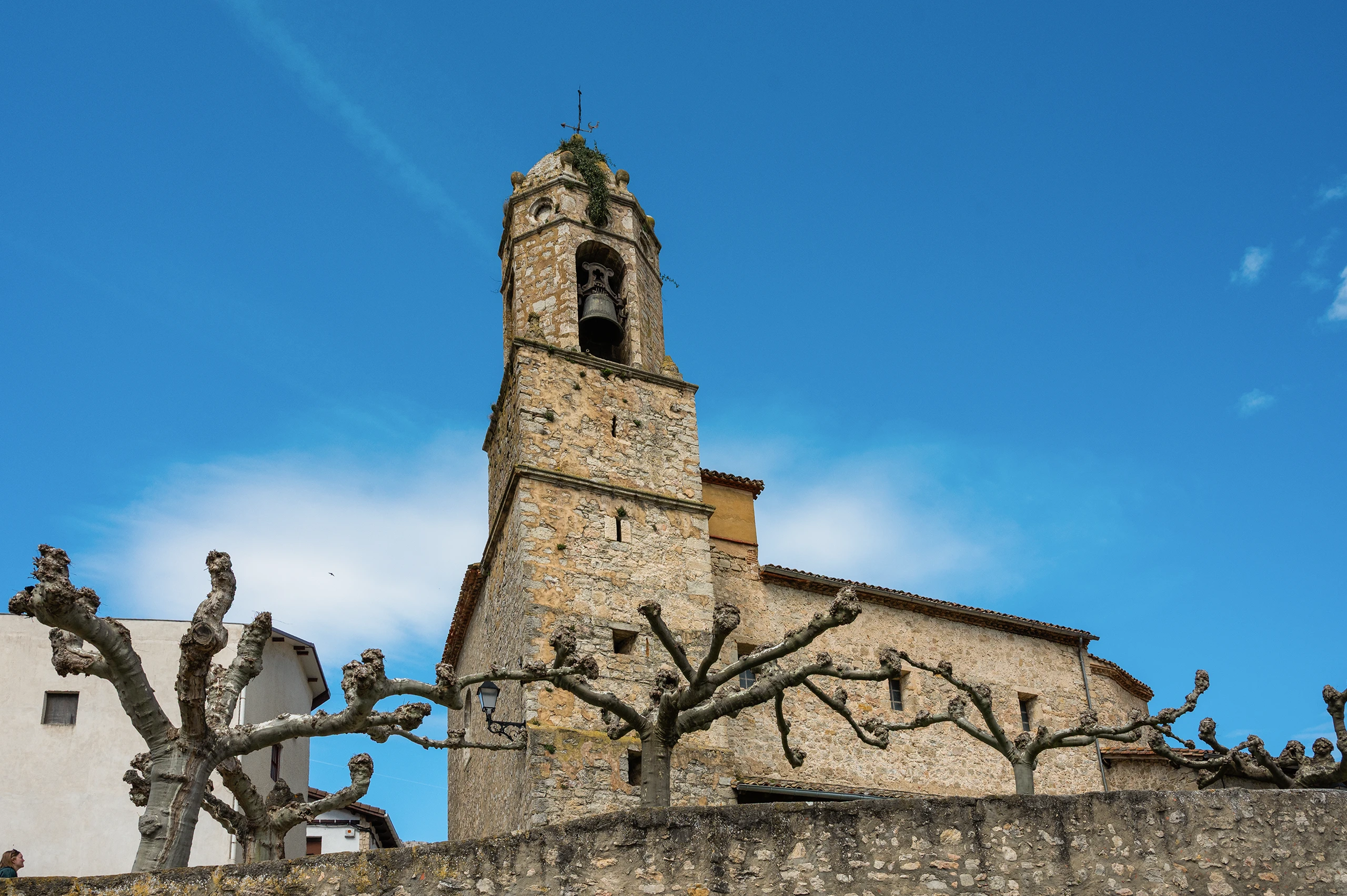
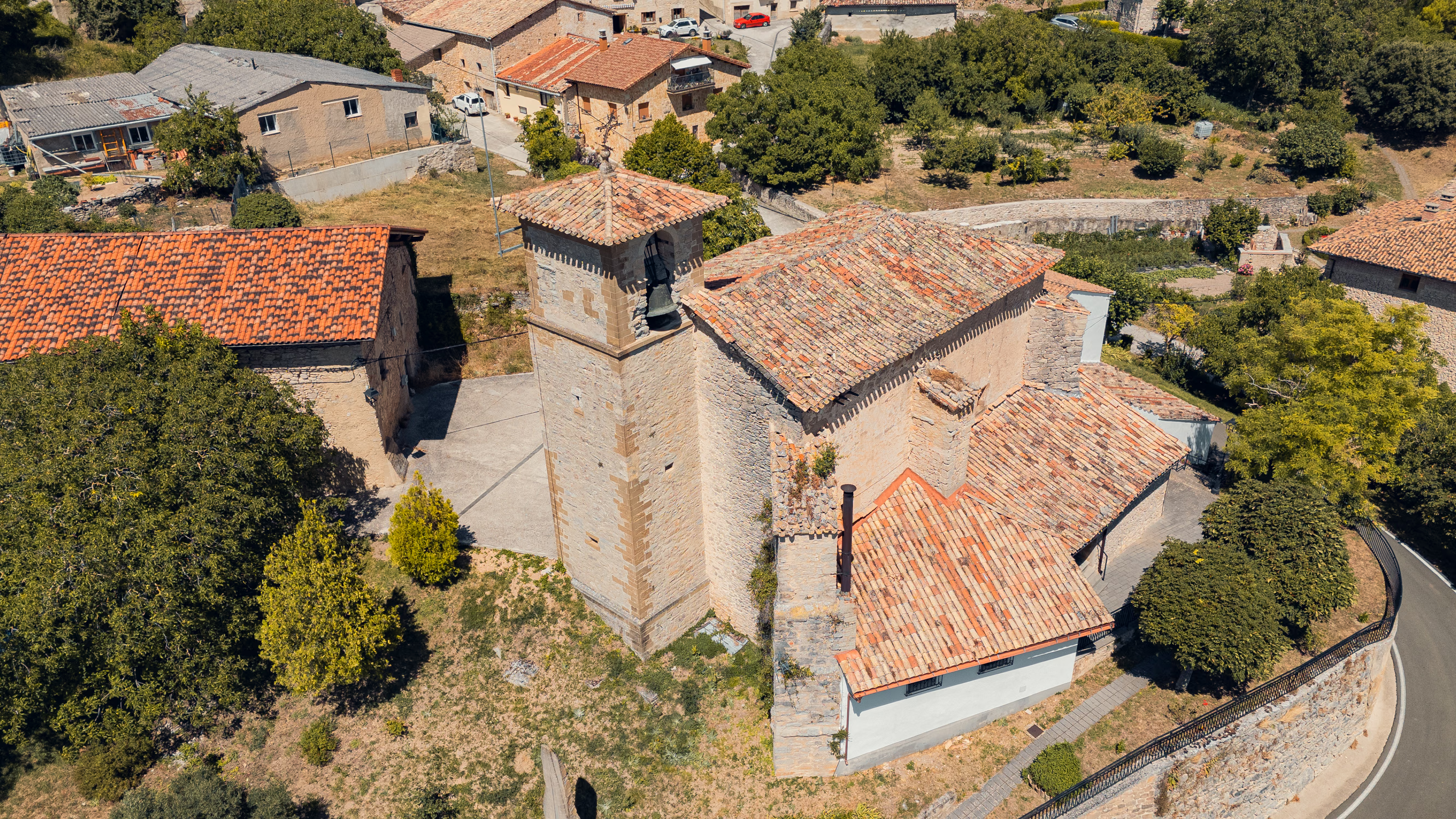
The main heritage landmark is the parish church of San Andrés, a 16th-century Gothic-Renaissance building that houses an outstanding main altarpiece dedicated to the patron saint, a work by Lope de Larrea created between 1606 and 1607. Next to the church is the fronton, a space deeply embedded in the town’s social life and known for having served as the setting for several scenes in the film *Tasio* (1986), which was shot in Viloria and is closely linked to its coal-mining heritage.
The religious heritage is rounded out by the chapels of San Antón and Nuestra Señora de la Soledad (or de los Dolores), located on the outskirts of the town center, and by the chapel of Santa Quiteria, situated deep in the Sierra de Lóquiz mountains and accessible via traditional trails. These trails allow visitors to explore a landscape of forests, pastures, and former coal-mining areas, with hiking trails and natural lookouts offering sweeping panoramic views of the Lana Valley.
The tradition of artisanal charcoal production remains one of Viloria’s most distinctive cultural features and forms part of its collective memory, alongside small ethnographic initiatives such as the private museum, which can be visited by appointment. Throughout the year, the festival calendar marks the busiest times, with the festivities in honor of Saint Andrew held in August, the pilgrimage to Saint Quiteria, and various neighborhood celebrations linked to the agricultural cycle and life in the mountains, which keep the village’s sense of community alive.