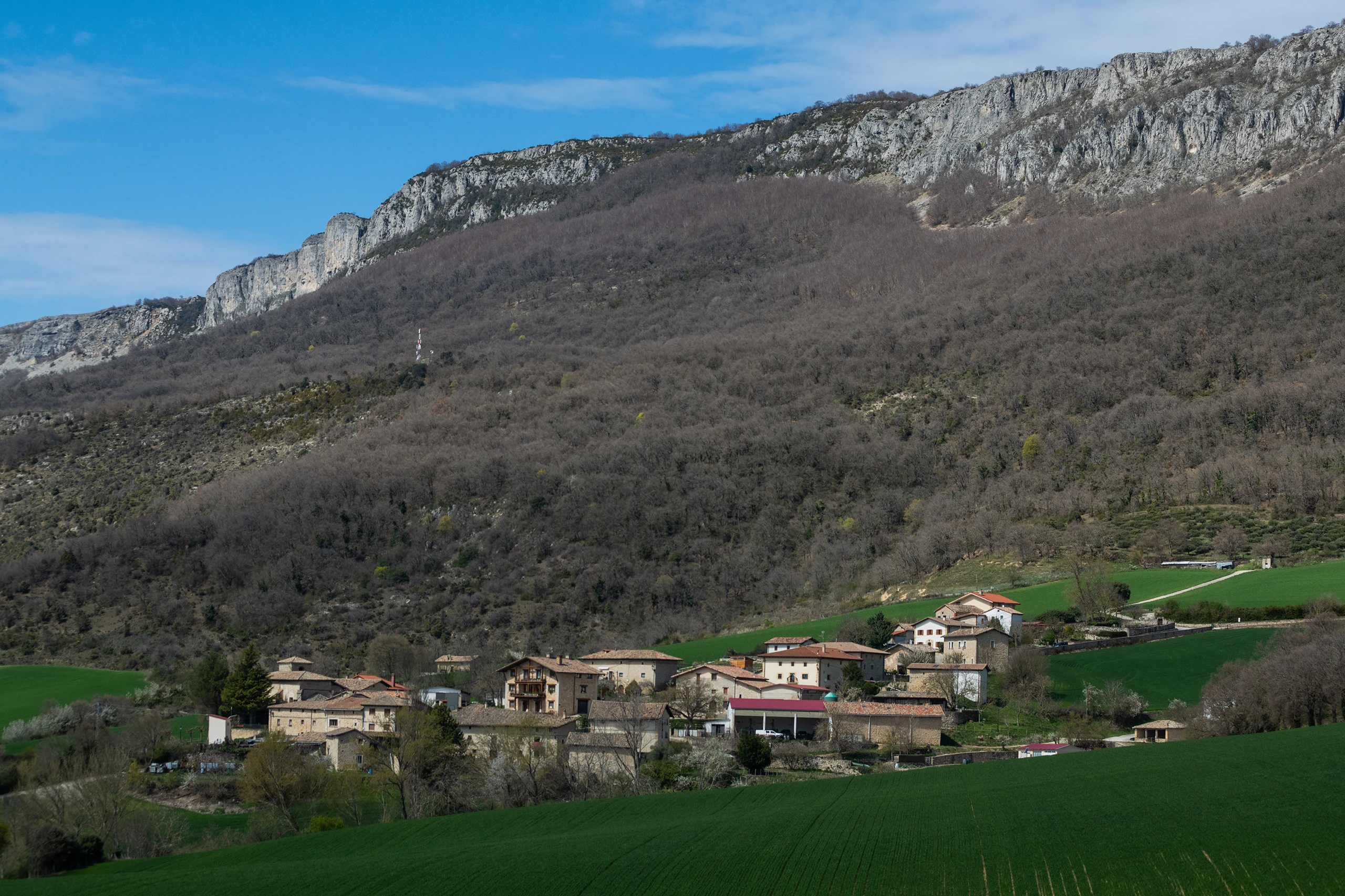
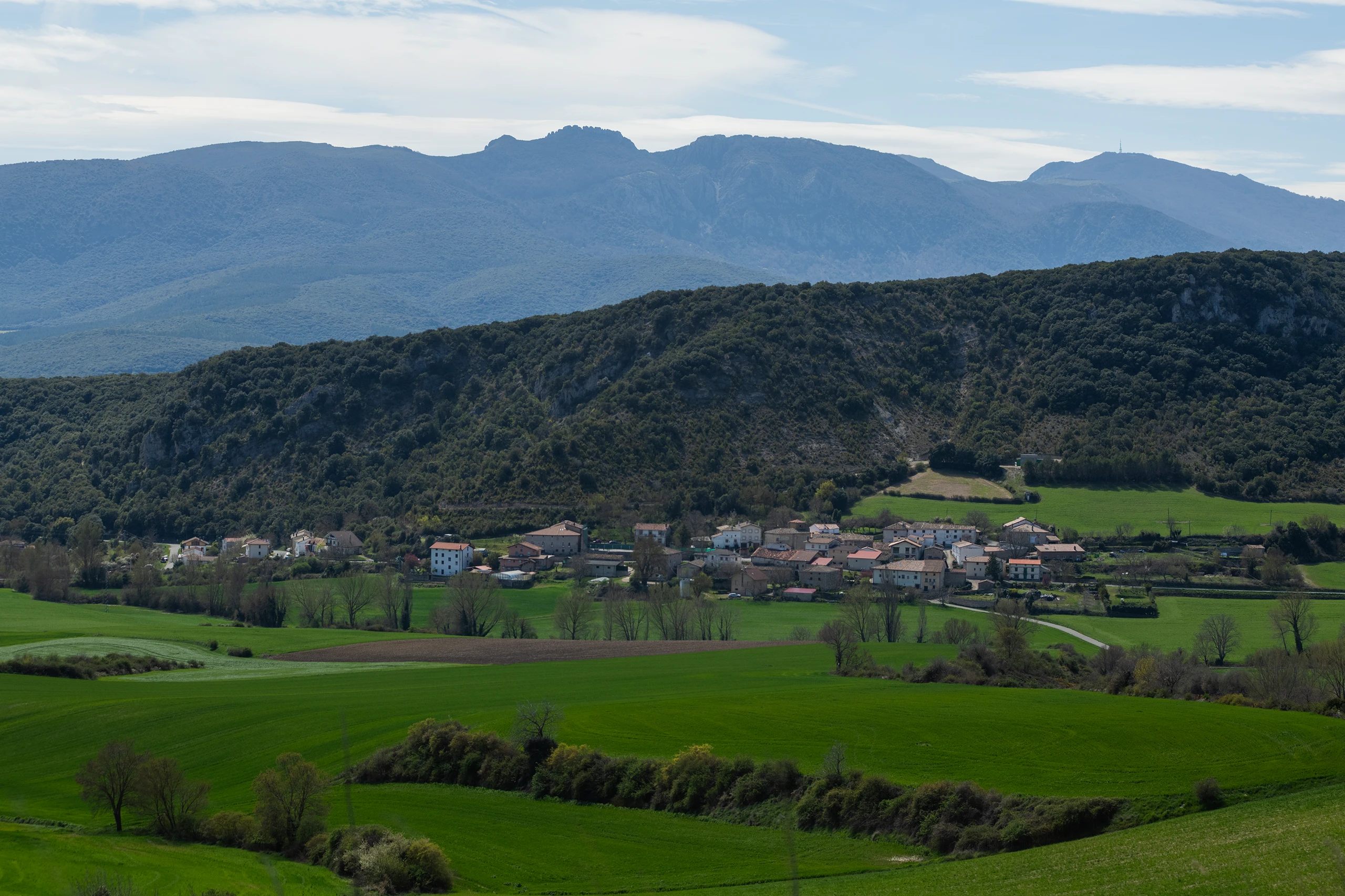
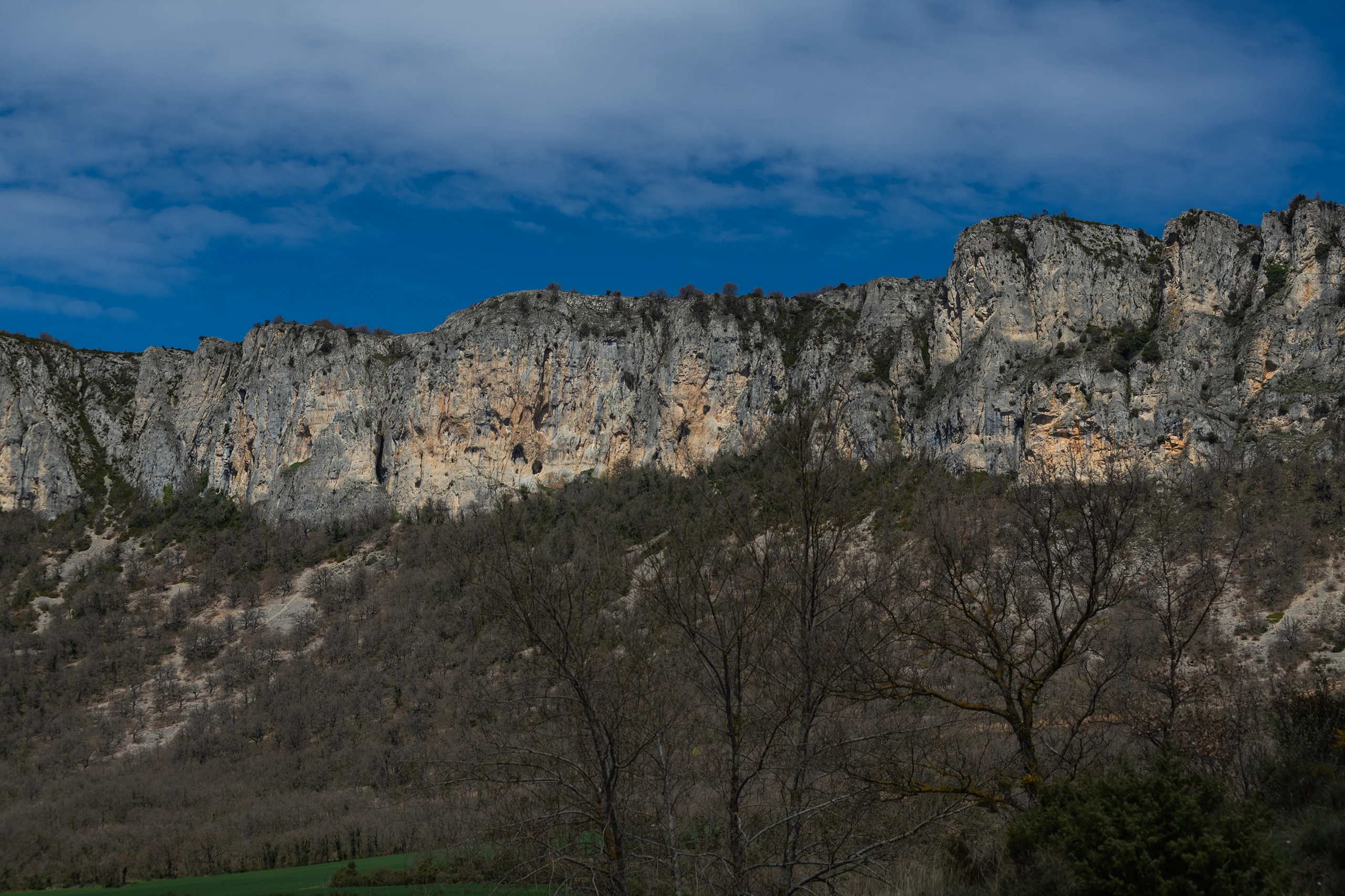
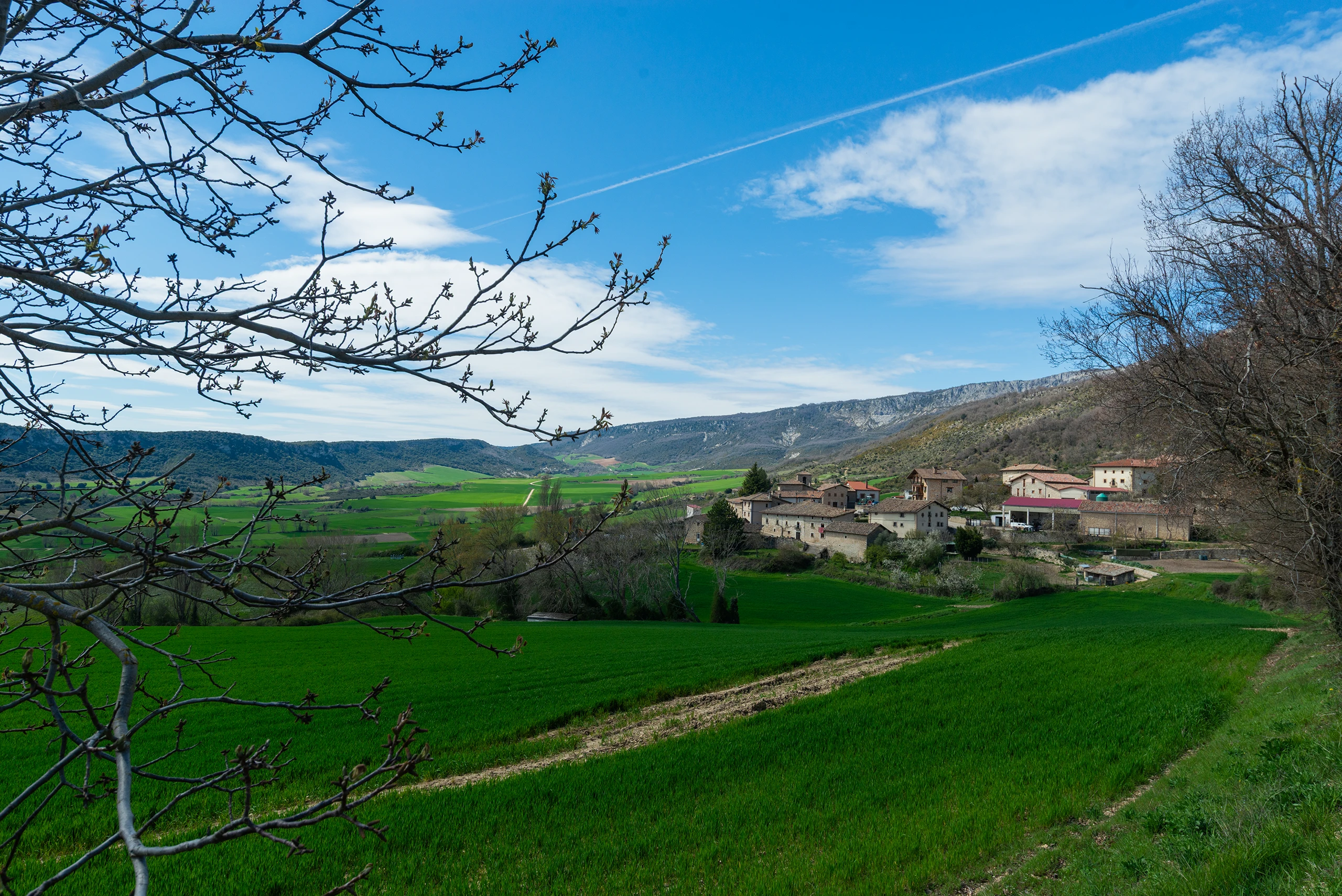
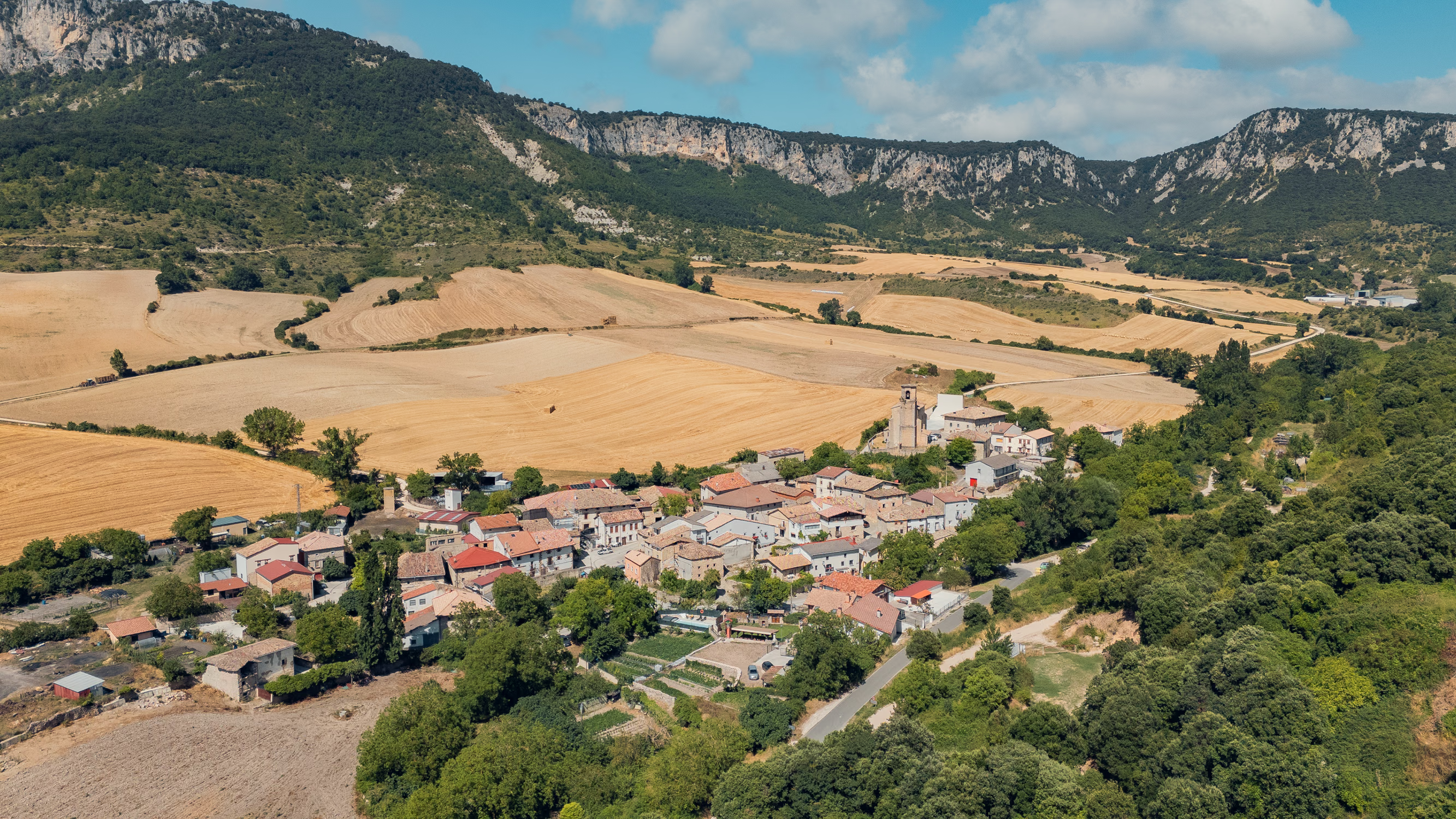
Ulibarri is one of those villages you don’t just happen to stumble upon. Situated at an altitude of nearly 700 meters and far from major transportation routes, it retains a distinctly rural character at the foot of the Sierra de Lóquiz. Here, the mountains, traditional trails, and tranquility are part of everyday life.
Forests, pastures, and trails surround the village center and connect directly to the mountains, making Ulibarri an ideal starting point for walks, mountain hikes, and leisurely observation of the landscape and nature.
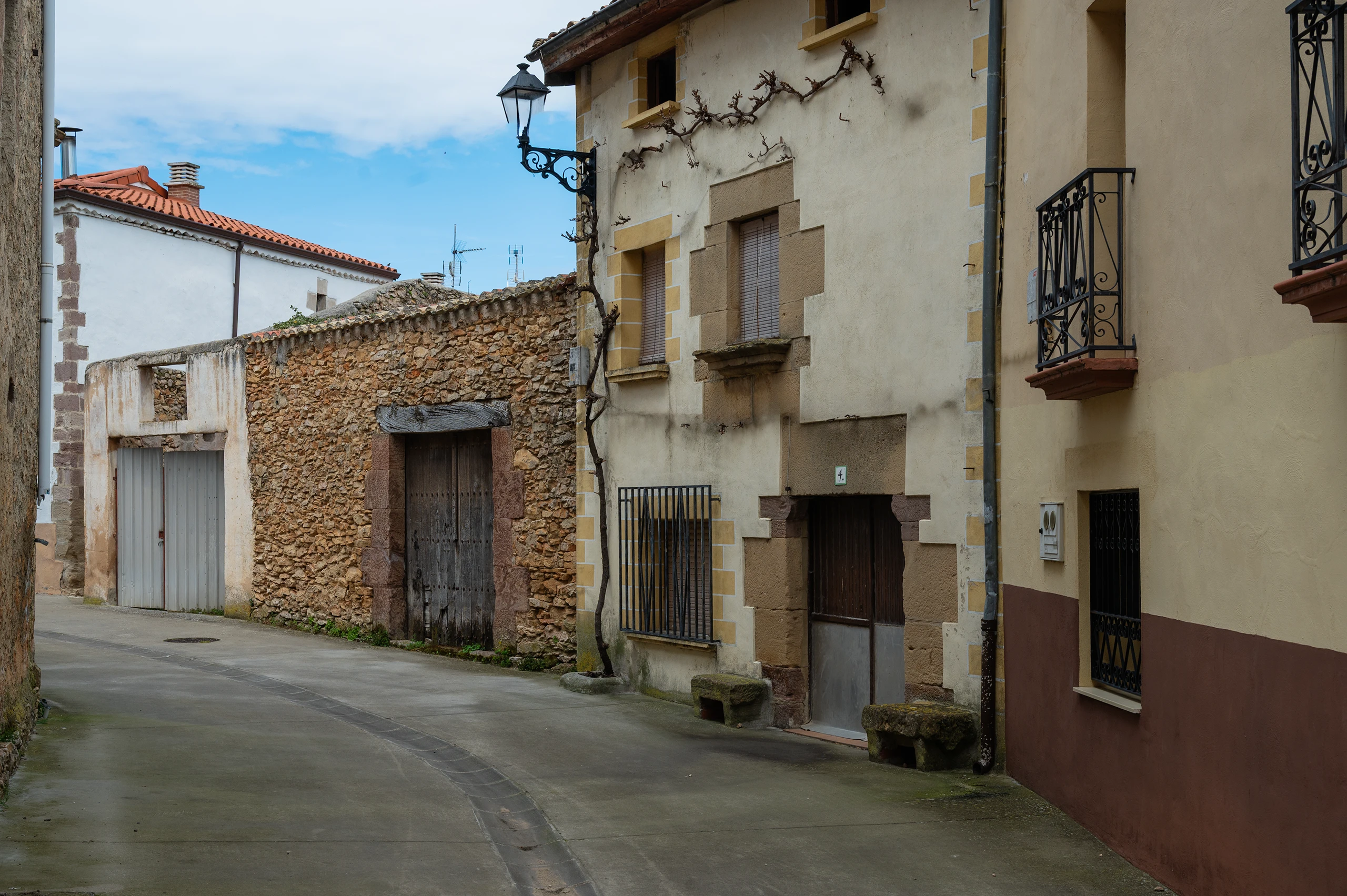
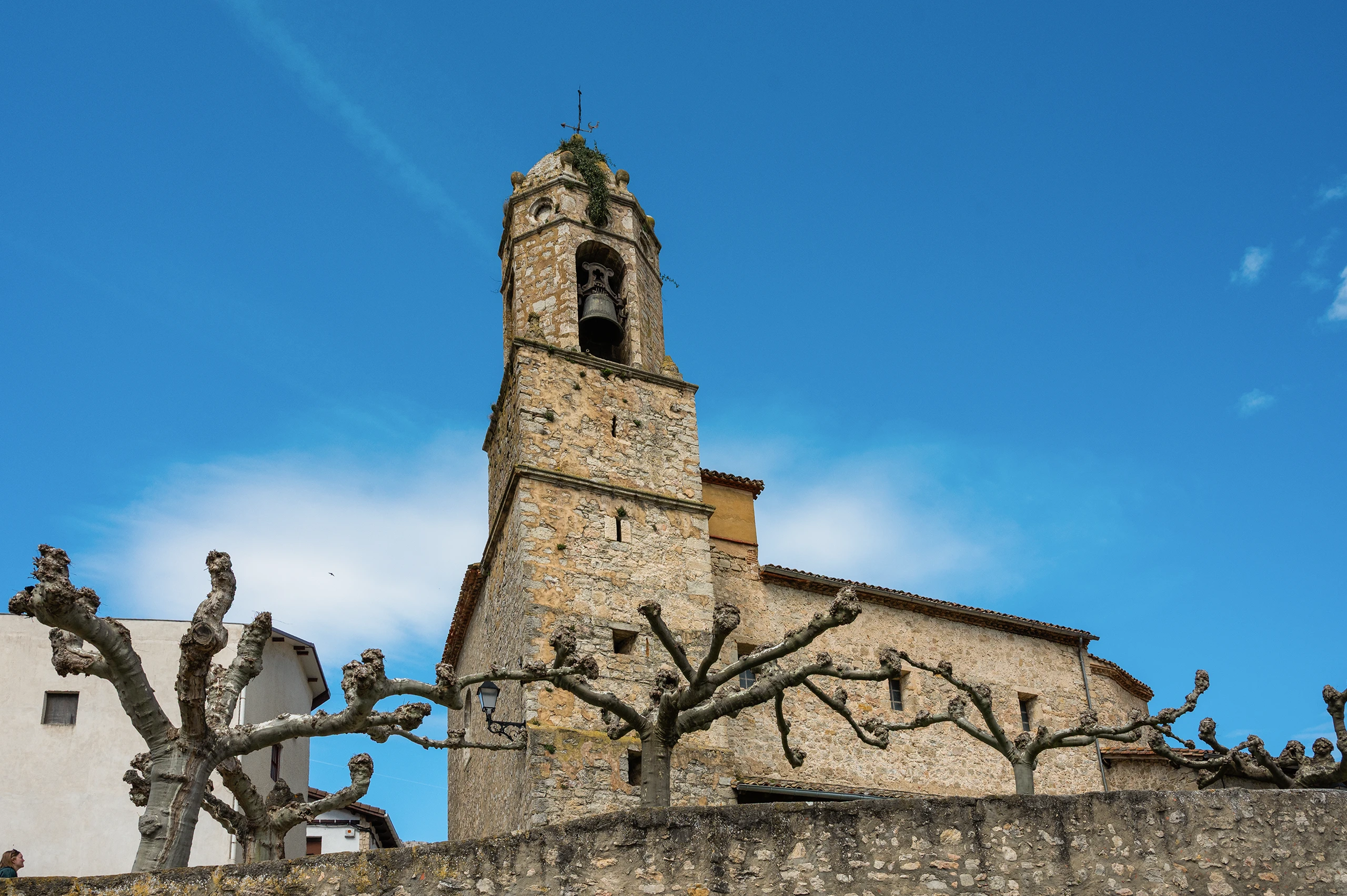
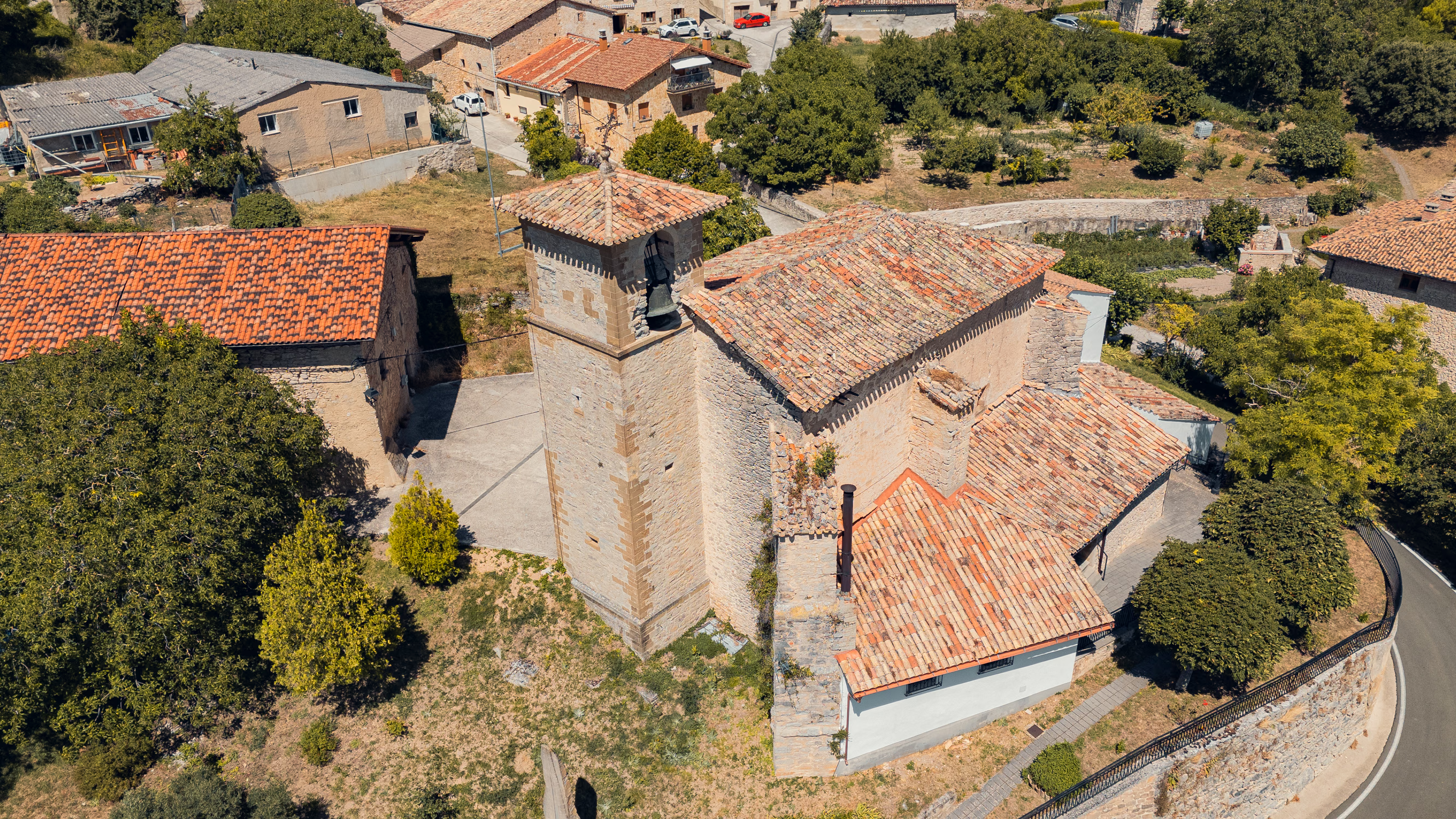
The village features harmonious and well-preserved architecture, with stone houses displaying the valley’s coats of arms dating from the 16th to the 18th centuries—a reminder of times of prosperity. At the entrance to the village stands the Church of Santa María, a 16th-century church built over an ancient Romanesque church, whose Christogram is still preserved on the façade. In the upper part of the village, a late 18th-century neoclassical fountain and the restored old washhouse also stand out—spaces linked to the village’s daily life.
The religious heritage is rounded out by the Santa Lucía Chapel, located on the outskirts of the town center. Tradition remains particularly alive in the town’s festival calendar, highlighted by the pilgrimage to San Cristóbal, held on the last weekend of May and considered one of the most important community gatherings of the year. At the end of August, the festivities in honor of Santa María la Real take place, while in December, the feast of Santa Lucía keeps the village’s community identity alive.